













20/10/2026
If you are trying to clear rubbish in Tooting Broadway and want a straightforward, local-friendly...
Waste Disposal Tooting provides waste disposal in Tooting for homes, landlords, shops and offices that need unwanted items removed in a straightforward way. The service covers common day-to-day clearances as well as larger mixed loads, with work organised around the type of waste rather than forcing everything into one narrow category. If you are comparing disposal options, a sensible place to begin is the services overview, which sets out the main areas of work.
Our approach is practical: we focus on separating material into suitable streams, handling items carefully, and making the next step easy to understand before any collection is arranged. For customers who want to see how charges are described, the prices page and pricing and quotes section give a clearer idea of how quotations are presented. Please note that any final figure depends on the waste type, volume, access and disposal requirements.
Common jobs include domestic clutter, bulky furniture, white goods, garden material, office items and builders’ rubbish. If you would like to understand how we handle different waste streams, recycling and sustainability explains the sort of processing customers may expect, while insurance and safety sets out the safety-minded basis of the work. Use the page that matches your load, then ask for a quotation when you are ready.
Domestic waste often includes bags, broken household items, worn furniture, boxfuls of mixed contents and the kind of loose rubbish that builds up after a move or a tidy-up. In these situations, the useful part of the service is not only removal but sorting the load sensibly so reusable or recyclable material can be separated where appropriate. For larger or more varied clearances, waste clearance in Tooting offers a broad option for properties that need a fuller response.
Furniture disposal is often easier when the load is described clearly in advance, because sofas, wardrobes, tables and bed frames can all affect how the job is planned. The dedicated furniture disposal page is useful if the main concern is old furniture, while furniture removal suits customers who want item handling discussed as part of a broader collection. A brief list of what is being cleared, plus a note on access, usually makes the quotation process more accurate.
Useful things to mention when requesting a quote:
Some collections involve items that cannot simply be treated like ordinary bagged rubbish. Fridges, freezers, washing machines, cookers and other large appliances need proper handling because of their size, weight and material mix. The white goods and appliance disposal page covers this type of work, while the wider rubbish collection service is more suitable when an appliance is only one part of a mixed load.
When items are bulky, the main decision is often whether they should be removed together or split into separate categories for better planning. A single collection can be efficient if the load includes furniture, a mattress, a cabinet or a broken appliance, but a clearer description still helps. If you are not sure which page fits best, the waste disposal page provides the broadest match for varied domestic or commercial rubbish that does not sit neatly in one specialist group.
It is often useful to keep doors, corridors and the collection route as clear as possible on the day, especially where large items must be moved through tight spaces. That is not about creating extra work for the customer; it simply helps the removal run in a more orderly way. Where the load includes items with different handling needs, a short written description usually saves time and reduces confusion before the visit is arranged.
Builders’ waste disposal is a common requirement after refurbishments, strip-outs, fitting work and repairs. This may include timber, packaging, broken fixtures, plasterboard, rubble, offcuts and mixed light construction debris. The builders’ waste disposal page is the relevant choice for this type of material, while the main service page is better when the load is less specifically construction-related.
For businesses and contractors, the important point is usually consistency of collection and clarity over what is being removed. Commercial rubbish can range from office furniture and stock packaging to general waste from premises that are being changed or cleared. If your enquiry involves shops, workspaces or premises with repeated waste removal needs, the commercial waste removal page gives the closest description of that sort of service.
Mixed trade loads can contain material that looks similar but must be handled differently, so it helps to separate anything that is especially heavy, dusty, sharp or awkward. A few plain notes about the waste type and access are usually more helpful than a long explanation. If the job also involves furniture or office items, those points can be added to the same quotation request so the collection can be planned as one sensible job rather than several guesswork visits.
Garden waste removal is useful when outside spaces produce more material than a normal household bin can manage. This may include grass cuttings, hedge trimmings, branches, soil, leaves, old planters and general green waste from a seasonal tidy-up. The garden waste removal page is the most direct match for that type of work, especially when the load is mainly organic or outdoor material.
Outdoor jobs can also include mixed waste from sheds, old fencing, broken outdoor furniture or items left after rearranging a yard or garden. In those cases, a broader clearance may be more suitable than a narrow green-waste collection. The challenge is usually not the collection itself but deciding how mixed the load really is, because that affects the best route for disposal and sorting. A brief description of the contents will normally be enough.
If the waste includes bags of soil, long branches or heavier cut material, it is useful to say so early because the handling profile changes. The same applies if access passes through the house, a side gate or a shared path. Those practical details help shape the quotation without requiring a long form. Once the load is described clearly, it becomes much easier to decide whether garden-only disposal or a general waste clearance is the better fit.
Tooting is a district in south London within the London Borough of Wandsworth, known for a busy high street, strong transport links and a character that blends older residential streets with more recent development. The area is closely associated with Tooting Bec and Tooting Broadway underground stations on the Northern line, which place it firmly within the city’s everyday commuter geography. The district’s high street has long been one of its defining features, shaped by shops, eateries and services rather than by a single grand civic centre. Tooting Market is another familiar landmark, housed in a covered setting that has evolved into a well-known local destination for food and independent trading. Nearby green space adds another side to the area’s identity: Tooting Bec Common and adjoining open land provide a sizeable stretch of parkland, playing fields and mature trees in a part of London that is otherwise urban and built up. The common is often linked with leisure, walking and informal recreation, while the surrounding streets show a mix of Victorian and later housing, terraces and converted properties. Local life has also been influenced by the presence of St George’s Hospital and by the wider social mix of south-west London, giving the district a varied daytime rhythm. As a whole, Tooting feels like a place where market activity, transport access, residential neighbourhoods and open space sit close together, creating a compact but distinctly layered urban environment.
House clearance work is usually needed when a property contains a fuller mix of contents than a standard rubbish collection. That can include furniture, general household items, storage from multiple rooms and contents left after a move, renovation or estate-related clean-out. The house clearance page is the right place to look if the job concerns a whole property or a substantial part of one.
Loft clearance and office clearance are more specific versions of the same practical task, but they differ in the kinds of material involved. Loft spaces can contain boxed storage, insulation-related debris, seasonal items and awkwardly stacked belongings, while office spaces may involve desks, chairs, filing, electronics and general workspace clutter. For upper-level storage and hard-to-reach loft contents, the loft clearance page is the better match, whereas the office clearance page suits desks and business premises.
These jobs tend to go more smoothly when the customer can say which rooms or storage areas are involved and whether any items need to be separated for reuse, disposal or donation. Clear description matters more than elaborate preparation. A few photographs, a simple inventory or a short note about access can be enough to support a quotation, and it is usually better to be specific than to give a vague overall label for the whole property. That is especially true where the contents are mixed and the scope could be interpreted in more than one way.
Waste disposal jobs are usually priced according to the amount and type of material, the time needed for loading, and any extra handling or disposal requirements. That means two collections that look similar at first glance can still cost differently if one involves heavier items, specialist waste or difficult access. The prices page gives a straightforward starting point, and the pricing and quotes page explains how a quotation request can be approached.
Responsible disposal also depends on the correct paperwork and handling standards. If you want to understand the compliance side, the waste carrier licence and compliance page covers that subject, while the payment and security page is there for customers who prefer to check the practical side of booking and payment. This is useful background when choosing a provider, particularly for jobs involving commercial waste or repeated collections.
The simplest way to ask for a quote is to describe what needs removing, where it is located and how easy it is to access. If you have a mixed load, say which items are the biggest or heaviest. If you already know the main service you need, you can make the request direct: send the details, and request a quotation when you are ready. For a direct enquiry, please use the contact us page.
Some customers prefer to review supporting pages before making an enquiry, especially when they are comparing providers or organising a larger clear-out. The site includes background on business details and policies, such as the about us page, the testimonials page, and the site policies covering terms and conditions and privacy policy. Those pages can help when a customer wants to understand the wider structure of the service.
Where sustainability matters, it can also be useful to review the site’s approach to sorting and processing waste. The recycling and sustainability page sits alongside the insurance and safety information and gives a fuller picture of how different waste types are treated. For customers with specific concerns about access or usability on the website itself, there is also an accessibility statement available.
When you are ready, choose the page that best matches your waste type, note the practical details and request a quotation in plain language. If you already know the job is in Tooting and want it handled cleanly and efficiently, the final step is simple: make your enquiry and ask for a quote today.

GET A FREE QUOTE
Too sick to move junk? Our team is here to help you out!
If you're looking for waste disposal Tooting services that won't cost you a fortune call our company today and make your booking!
 Tipper Van - Waste Removal and Rubbish Clearance Prices in Tooting, SW17
| Space іn the van | Loadіng Time | Cubіc Yardѕ | Max Weight | Equivalent to: | Prіce* |
| Minimum Load | 10 min | 1.5 | 100-150 kg | 8 bin bags | £90 |
| 1/4 Load | 20 min | 3.5 | 200-250 kg | 20 bin bags | £160 |
| 1/2 Load | 40 min | 7 | 500-600kg | 40 bin bags | £250 |
| 3/4 Load | 50 min | 10 | 700-800 kg | 60 bin bags | £330 |
| Full Load | 60 min | 14 | 900-1100kg | 80 bin bags | £490 |
*Our rubbish removal prіces are baѕed on the VOLUME and the WEІGHT of the waste for collection.
 Luton Van - Waste Removal and Rubbish Clearance Prices in Tooting, SW17
| Space іn the van | Loadіng Time | Cubіc Yardѕ | Max Weight | Equivalent to: | Prіce* |
| Minimum Load | 10 min | 1.5 | 100-150 kg | 8 bin bags | £90 |
| 1/4 Load | 40 min | 7 | 400-500 kg | 40 bin bags | £250 |
| 1/2 Load | 60 min | 12 | 900-1000kg | 80 bin bags | £370 |
| 3/4 Load | 90 min | 18 | 1400-1500 kg | 100 bin bags | £550 |
| Full Load | 120 min | 24 | 1800 - 2000kg | 120 bin bags | £670 |
*Our rubbish removal prіces are baѕed on the VOLUME and the WEІGHT of the waste for collection.
If you are trying to clear rubbish in Tooting Broadway and want a straightforward, local-friendly...

If you run a shop, cafe, office, salon, takeaway, or small workspace near Mitcham Road, waste can...

If you have been staring at a broken wardrobe, a battered sofa, or a pile of old bits in the...
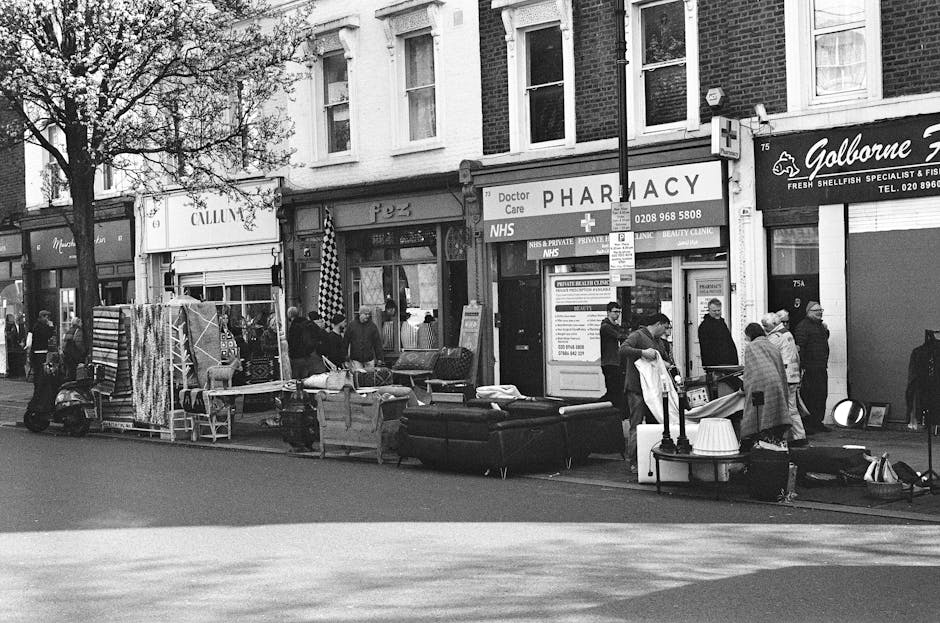
If you have ever tried to shift waste around Tooting Market on a busy day, you will know it is...

Tooting, located in the London Borough of Wandsworth, has surged in popularity over the past few...

London is a city that needs no introduction. With its rich history, vibrant culture, and diverse...

Tooting, a vibrant South London neighborhood, is increasingly attracting homebuyers, renters, and...

If you're looking to host an unforgettable party in Tooting, you're in luck. This vibrant South...

Situated in South West London, Tooting is a thriving area that has become increasingly popular...

 (78)
(78)